
As the global transition to renewable energy accelerates, solar power has moved to the forefront of clean energy solutions. However, building a highly efficient solar farm requires more than just advanced photovoltaic (PV) panels; it demands robust, durable, and cost-effective structural support. ERW tubes in solar energy will be fully introduced in this article.
Among the various materials used in utility-scale solar installations, ERW (Electric Resistance Welded) steel tubes have emerged as a critical component. From rigid fixed-tilt racking to dynamic single-axis solar trackers, ERW tubes provide the mechanical backbone needed to withstand decades of environmental stress.
In this comprehensive guide, we explore the vital applications, technical advantages, and selection criteria for ERW tubes in the solar sector.
Table of Contents
What is an ERW Tube and Why ERW Tubes Used in Solar Energy?
Electric Resistance Welded (ERW) tubes are manufactured by cold-forming a sheet of steel into a cylindrical shape and then welding the seam using high-frequency electrical current. Unlike seamless pipes, ERW tubes in solar energy offer exceptional dimensional accuracy, uniform wall thickness, and a superior strength-to-weight ratio.
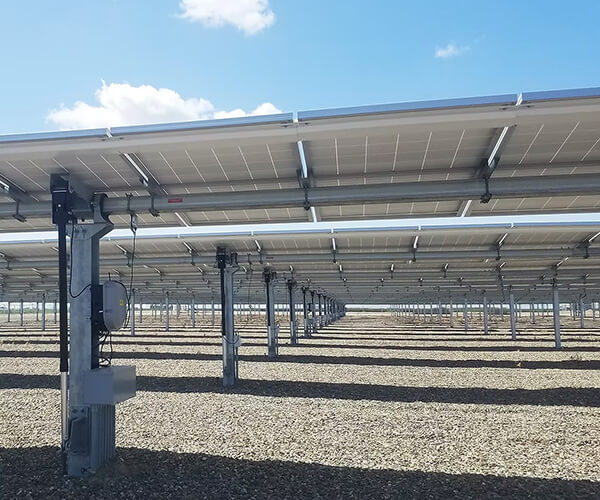
In solar applications, structural steel must endure high wind loads, snow accumulation, and seismic activities while remaining economically viable. ERW steel pipes perfectly bridge the gap between high structural integrity and low production costs, making them the go-to choice for global EPC (Engineering, Procurement, and Construction) contractors.
Key Applications of ERW Tubes in Solar Energy
ERW steel tubes are versatile components integrated into various stages of photovoltaic structural engineering.
1. Drive Tubes and Torque Tubes for Solar Trackers
Solar trackers dynamically follow the sun’s path to maximize energy yield, often increasing efficiency by 20% to 30% compared to fixed systems. The torque tube is the central rotating axis of a solar tracker that carries the PV modules and resists torsional (twisting) forces caused by heavy winds.
- Why ERW? Precision-engineered square or round ERW tubes offer the exact torsional stiffness required to prevent structural warping over a 25-year lifespan.
2. Posts and Piles for Fixed-Tilt PV Mounting Systems
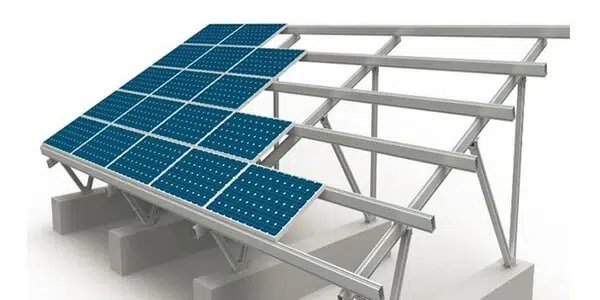
For fixed-tilt solar arrays, ERW tubes are driven directly into the ground (ground screws or driven piles) to form the foundational support.
- Why ERW? Their uniform wall thickness ensures consistent load distribution, preventing the structures from buckling under heavy snow loads.
3. Bracing and Crossbeams
ERW pipes with smaller diameters are widely used as diagonal bracing elements to stabilize heavy solar racking matrices, ensuring the entire installation remains rigid.
Top Advantages of Using ERW Steel Tubes for Solar Projects
When optimizing utility-scale solar projects, engineers look for reliability, scalability, and cost-efficiency. Here is why ERW tubing outperforms alternative structural options:
High Dimensional Precision
Solar trackers rely on automated gearboxes and bearings. Any slight deviation in the straightness or ovality of the torque tube can cause mechanical failure. ERW tubes boast incredibly tight tolerances, ensuring smooth rotation and seamless integration with tracking mechanisms.
Exceptional Corrosion Resistance (Pre- & Post-Galvanization)
Solar farms are frequently built in harsh environments, including arid deserts, coastal regions, and high-salinity areas. ERW tubes used in solar are typically treated with Hot-Dip Galvanized (HDG) coatings or pre-galvanized (like ZAM – Zinc-Aluminum-Magnesium coatings) to provide decades of rust protection.
Superior Strength-to-Weight Ratio
By utilizing High-Strength Low-Alloy (HSLA) steel grades, ERW tubes achieve the necessary yield strength without adding excessive weight. This reduces shipping costs and simplifies on-site installation.
Cost-Effectiveness
Compared to seamless steel pipes or aluminum extrusions, the ERW manufacturing process is highly efficient and scalable, passing significant cost savings down to the solar project developers.
| Feature | ERW Steel Tube | Seamless Steel Pipe | Aluminum Extrusion |
|---|---|---|---|
| Cost | Low to Medium | High | High |
| Dimensional Tolerance | Excellent | Moderate | Excellent |
| Strength | High (with HSLA) | Very High | Moderate |
| Solar Suitability | Ideal for Torque Tubes/Piles | Over-engineered | Limited to small-scale/rooftop |
Technical Specifications to Consider for Solar ERW Tubes
To ensure long-term performance, procurement managers must evaluate specific technical standards when sourcing ERW pipes for solar structures:
Steel Grades: Commonly sourced in ASTM A500 (Grades B & C), ASTM A53, or customized high-strength structural grades (up to S355 or S450).
Shapes: Round, Square, Rectangular, and custom Octagonal profiles (highly popular for tracker torque tubes to prevent bearing slippage).
Coatings: Hot-Dip Galvanized (ASTM A123) with coating thicknesses ranging from 45μm to 85μm+, or advanced Zinc-Aluminum-Magnesium (ZAM) coatings for superior self-healing edge protection.
Conclusion: Partner with a Reliable Solar ERW Tube Manufacturer
As solar technology evolves, the demand for smarter, tougher, and more cost-effective structural materials will continue to rise. ERW tubes have proven to be an indispensable asset in driving down the Levelized Cost of Energy (LCOE) for utility-scale solar plants worldwide.
At NEW VICTOR GROUP, we specialize in manufacturing high-precision, customized ERW steel tubes tailored for solar tracking and PV mounting systems. Our state-of-the-art galvanizing and fabricating capabilities ensure your solar structures endure the test of time and nature.
Looking for high-quality ERW tube mill production line for your project? Contact our engineering team today for a custom quote and technical consultation.
FAQ
Q: Why are octagonal & square ERW tubes more popular than round tubes for solar tracker systems?
A: Round ERW steel tubes are widely adopted for fixed PV brackets, yet octagonal and square tubes are preferred for torque tubes of solar trackers.
Polygonal profiles deliver superior torsional rigidity to resist twisting force generated by strong wind. More importantly, their flat contact surfaces allow mounting clamps and drive bearings for PV modules to be firmly locked, effectively eliminating slippage during rotation. By contrast, round tubes require extra positioning pins or complicated welding to achieve the same fixing performance.
Q: What are the differences between Hot-Dip Galvanized (HDG) and Zinc-Aluminum-Magnesium (ZAM) coatings for ERW steel tubes used in PV brackets?
Zinc-Aluminum-Magnesium (ZAM): It is a pre-coated treatment applied on steel coils before tube production. Though the coating layer is thinner, the addition of aluminum and magnesium delivers salt spray resistance several times higher than ordinary hot-dip galvanizing. Its standout advantage is self-healing performance: when tubes are cut or punched on site, exposed cut edges will automatically form a dense protective film to avoid edge rusting. For this reason, ZAM coated tubes are increasingly favored for coastal and high-humidity PV projects.
Q: Will the weld seam of ERW tubes affect the long-term structural safety of PV brackets?
A: It will not at all, provided the tubes pass strict industrial quality standard inspections.
Modern High-Frequency Welding (HFW/ERW) technology is highly mature. Under thermal action and extrusion force, the molecular structure at the weld fuses perfectly with the base metal.
Before delivery, high-quality ERW tubes for photovoltaic use go through online Eddy Current Testing (ET) or ultrasonic inspection, plus weld annealing heat treatment to eliminate internal stress.
Qualified ERW tubes feature weld strength equivalent to the tube base body, fully capable of bearing wind and snow loads outdoors for over 25 years of service life of PV brackets.